[HtoA] Using custom Arnold cameras in Houdini


Here’s how to set up your custom camera in Houdini. I’ll use the Oculus camera as an example.

  1. Copy OculusCamera.dll and OculusCamera.mtd to your HtoA arnold\plugins folder. For example, on my machine, that’s here:
    C:\Users\StephenBlair\htoa\htoa-1.5.0_r1338_houdini-14.0.258\htoa-1.5.0_r1338_houdini-14.0.258\arnold\plugins
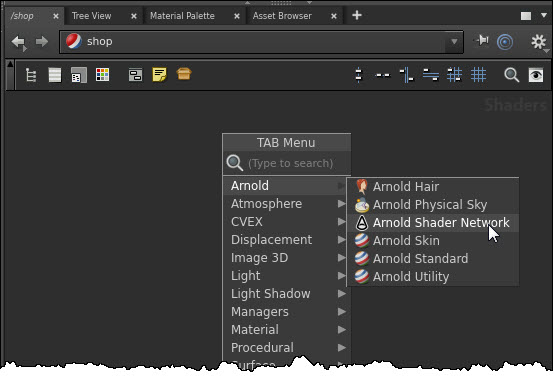
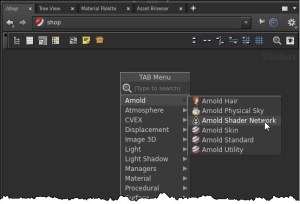
  2. In the Shop network, create an Arnold Shader Network.
    shop_ArnoldShaderNetwork
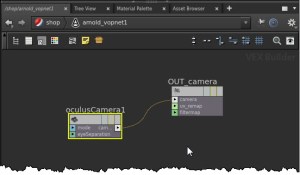
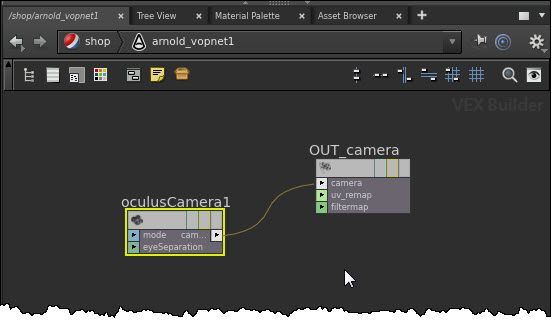
  3. In the Arnold Shader Network (arnold_vopnet), create an Camera > Oculus Camera and an Output > Camera Output. Connect the Oculus Camera to the OUT_Camera.
    shop_arnold_vopnet
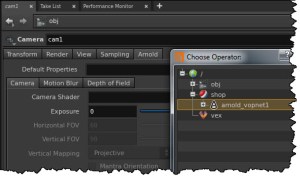
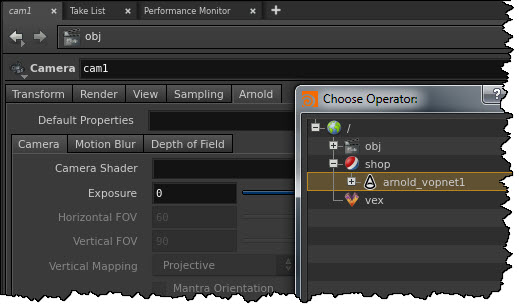
  4. In the Obj network, select your camera, and in the Camera properties, set the Camera Shader to point to your arnold_vopnet.
    camera_shader

[RLM] No ISV servers to start redux


The technical reason for a “No ISV servers to start” message is that that RLM could not read the ISV line from the license file.

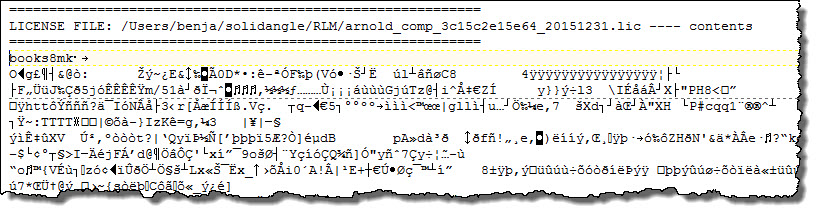
So, for example, if you somehow save the license file as a binary file that looks like this:

books8mk

then you’ll get No ISV servers to start, because obviously there’s no ISV line in that file.

Note: You’ll also see The hostname in the license file(s) may be incorrect, but that warning can always be safely ignored.

05/14 09:17 (rlm) 
05/14 09:17 (rlm) WARNING: No license file for this host (StephenBlair-PC)
05/14 09:17 (rlm)          The hostname in the license file(s)
05/14 09:17 (rlm)          may be incorrect
05/14 09:17 (rlm) 
05/14 09:17 (rlm) License files:
05/14 09:17 (rlm)     arnold_eval_90b11c647d93_20150514.lic
05/14 09:17 (rlm) 
05/14 09:17 (rlm) RLM License Server Version 11.2BL2

	Copyright (C) 2006-2014, Reprise Software, Inc. All rights reserved.

05/14 09:17 (rlm) License server started on StephenBlair-PC
05/14 09:17 (rlm) Server architecture: x64_w2
05/14 09:17 (rlm) License files:
05/14 09:17 (rlm)     arnold_eval_coffee0000_20150514.lic
05/14 09:17 (rlm) 
05/14 09:17 (rlm) Web server starting on port 5054
05/14 09:17 (rlm) Using TCP/IP port 5053
05/14 09:17 (rlm) ... adding UDP/IP port 5053
05/14 09:17 (rlm) (No ISV servers to start)

[MtoA] Instancing lights


If you want to instance lights in Maya, use Duplicate Special. MtoA will correctly translate those instances to Arnold (as copies, not instances, because Arnold itself doesn’t support light instances).

MtoA doesn’t support the particle instancer for lights.

PS I don’t think Maya supports instancing lights with the particle instancer. The Maya docs say “Do not instance lights; they’ll have no effect in rendering.”, and that’s the behavior I’ve observed with mental ray and the Maya Software renderer. Also, if I leave the viewport set to Viewport 2.0, Maya crashes when I try to use the particle instancer with point or spot lights (and that’s without MtoA loaded).

Creating a polymesh with the Arnold Python api


polymesh
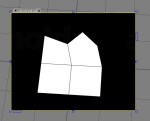
Here’s a snippet that shows how to create a simple four-polygon polymesh node with the Arnold Python API.

n = AiNode( "polymesh" )
AiNodeSetStr( n, "name", "grid" )

nsides = [4, 4, 5, 6]
AiNodeSetArray( n, "nsides", AiArrayConvert(len(nsides), 1, AI_TYPE_UINT, (c_uint*len(nsides))(*nsides) ) )

vidxs = [0, 1, 4, 3, 1, 2, 5, 4, 3, 4, 7, 6, 9, 4, 5, 11, 8, 10, 7]
AiNodeSetArray( n, "vidxs", AiArrayConvert(len(vidxs), 1, AI_TYPE_UINT, (c_uint*len(vidxs))(*vidxs) ) )

nidxs = [0, 1, 2, 3, 1, 4, 5, 2, 3, 2, 6, 7, 8, 2, 5, 9, 10, 11, 6]
AiNodeSetArray( n, "nidxs", AiArrayConvert(len(nidxs), 1, AI_TYPE_UINT, (c_uint*len(nidxs))(*nidxs) ) )

vlist = [-1, 0, -1, -1, 0, 0, -1, 0, 1, -0.197835326, 0, -0.742445886, 0, 0, 0, 0, 0, 1, 0.802164674, 0, -0.742445886, 1, 0, 0, 1, 0, 1, 0.270379633, 0, -1.21302056, 1, 0, 0.508926511, 0.496316135, 0, 1]
AiNodeSetArray( n, "vlist", AiArrayConvert(len(vlist), 1, AI_TYPE_FLOAT, (c_float*len(vlist))(*vlist) ) )

nlist = [0, 1, 0, 0, 1, 0, 0, 1, 0, 0, 1, 0, 0, 1, 0, 0, 1, 0, 0, 1, 0, 0, 1, 0, 0, 1, 0, 0, 1, 0, 0, 1, 0, 0, 1, 0]
AiNodeSetArray( n, "nlist", AiArrayConvert(len(nlist), 1, AI_TYPE_FLOAT, (c_float*len(nlist))(*nlist) ) )

m = AtMatrix( 	1, 0, 0, 0,
		0, 1, 0, 0,
		0, 0, 1, 0,
		0, 0, 0, 1 )

am = AiArrayAllocate(1, 1, AI_TYPE_MATRIX)
AiArraySetMtx( am, 0, m )

AiNodeSetArray( n, "matrix", am  )

AiNodeSetBool( n, "smoothing", True )

AiNodeSetByte(n, "visibility", 255 )

# Assign a shader to the polymesh node
u = AiNode( "utility" )
AiNodeSetStr( u, "name", "aiUtility1" )

AiNodeSetPtr( n, "shader", u )

And here’s the resulting node in the ASS file:

polymesh
{
 name grid
 nsides 4 1 UINT
4 4 5 6
 vidxs 19 1 UINT
  0 1 4 3 1 2 5 4 3 4 7 6 9 4 5 11 8 10 7
 nidxs 19 1 UINT
  0 1 2 3 1 4 5 2 3 2 6 7 8 2 5 9 10 11 6
 vlist 12 1 POINT
  -1 0 -1 -1 0 0 -1 0 1 -0.197835326 0 -0.742445886 0 0 0 0 0 1 0.802164674 0 -0.742445886 1 0 0
  1 0 1 0.270379633 0 -1.21302056 1 0 0.508926511 0.496316135 0 1
 nlist 12 1 VECTOR
  0 1 0 0 1 0 0 1 0 0 1 0 0 1 0 0 1 0 0 1 0 0 1 0 0 1 0 0 1 0 0 1 0 0 1 0
 smoothing on
 visibility 255
 matrix
 1 0 0 0
 0 1 0 0
 0 0 1 0
 0 0 0 1
 shader "aiUtility1"
}
[Arnold] Standard shader AOVs and shading trees


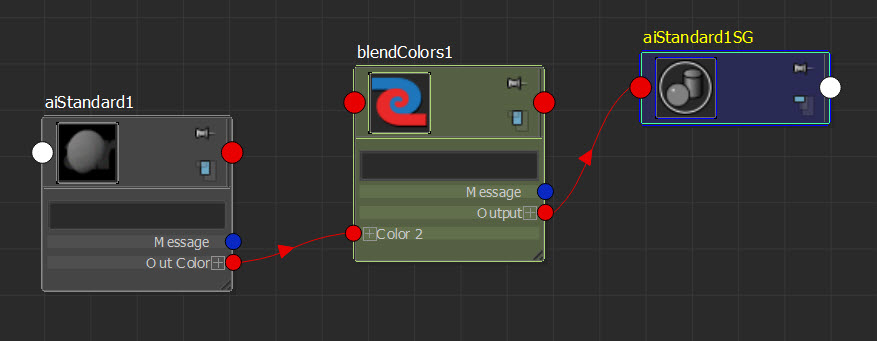
Here’s a question asked recently. Given a shading tree like the one below, why don’t AOVs like diffuse_direct include the blended color from the Blend Color node?

aovs_blend_color

The answer: because it is the Standard shader that writes the AOV, not the Blend Color shader. The diffuse_direct AOV gets the diffuse layer calculated by the Standard shader, and that’s it.

The MtoA AOV browser shows you what AOVs are implemented by which shaders:
aovs_mtoa_browser

[MtoA] Normal mapping with mayaBump2d


mayaBump2D has an RGB parameter for normal maps, and it’s named “normal_map”:

C:\solidangle\mtoadeploy\2015\bin>kick -l ..\shaders -info mayaBump2D
node:         mayaBump2D
type:         shader
output:       RGBA
parameters:   11
filename:     ..\shaders/mtoa_shaders.dll
version:      4.2.4.1

Type          Name                              Default
------------  --------------------------------  --------------------------------

FLOAT         bump_map                          0
FLOAT         bump_height                       1
RGB           normal_map                        0, 0, 1
BOOL          flip_r                            true
BOOL          flip_g                            true
BOOL          swap_tangents                     false
BOOL          use_derivatives                   true
BOOL          gamma_correct                     true
ENUM          use_as                            bump
RGBA          shader                            0, 0, 0, 1
STRING        name

In Maya, you don’t connect your normal map directly to mayaBump2D.normal_map. Instead, just connect the normal map alpha to the Bump Value
normal_map_mayaBump2D
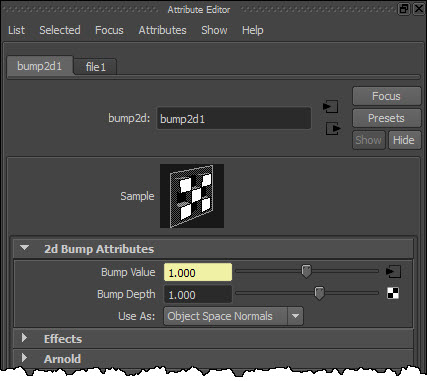
and then change bump2d > 2d Bump Attributes > Use As to Object Space Normals or Tangent Space Normals.
mayaBump2D_Use_As
The Use As parameter controls how MtoA translates the shaders to Arnold. For example, if Use As is Object Space Normals, you get this:

mayaBump2D
{
 name bump2d1
 bump_map file1.a
 bump_height 1
 normal_map file1
 flip_r on
 flip_g on
 swap_tangents off
 use_derivatives on
 gamma_correct on
 use_as "object_normal"
 shader aiStandard1
}

MayaFile
{
 name file1
 ...
 filename "shaders_offest_normalmap.jpg"
 ...

Notice that file1 (the MayaFile node) is linked to mayaBump2D.normal_map.

[MtoA] Finding your Arnold log file


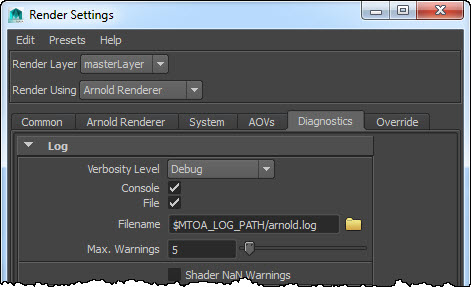
When you enable file logging, it can seem a bit of a mystery where the .log files end up. You may find log files in different folders of your project, like the scenes folder, or the sourceimages folder.
mtoa_file_logging
Here’s how it works.

  • If the MTOA_LOG_PATH environment variable is set, the log files are saved to the folder specified by MTOA_LOG_PATH.
  • If MTOA_LOG_PATH is not set, the log files are saved in the current workspace directory (in MEL, that’s workspace -q -directory). In other words, the log files are saved to last place you went with the Maya file browser. If you haven’t used the file browser yet, the log file is saved in the root folder of the project.
  • If you click the folder icon beside the Filename text box, you can choose where the log files are saved.

Note that the log files will always include the frame number, so you’ll get arnold.1.log, arnold.2.log, and so on.

[Arnold] System requirements: minimum Windows version


As of Arnold 4.2.3.1, the minimum Windows version is Windows 7. We no longer support Windows versions before Windows 7 and Windows Server 2008 R2.

This applies to all plug-ins (such a MtoA 1.2.02 and later, or SItoA 3.4 and later) that use Arnold 4.2.3.1 or later.

If you try to load an Arnold plugin on an unsupported Windows, you’ll get an error (something like “The specified procedure could not be found”).

On Vista with Arnold 4.2.3.1 or later, kick -nodes gives you a more specific error:

"kick.exe - Entry Point Not Found" 
"The procedure entry point SetThreadGroupAffinity could not be located in the dynamic link library KERNEL32.dll."

[Arnold] Getting started with the Arnold Python API


You can download Arnold here. The Arnold download (aka the Arnold SDK) includes the Arnold library, the Arnold C++ API, the API docs, and the Python bindings for the Arnold API.

To use the Arnold Python API, you need to add the Arnold python folder to the PYTHONPATH:

set PYTHONPATH=C:\solidangle\arnold\Arnold-4.2.4.0-windows\python

Here’s a “hello world” written with the Arnold Python API:

#
# hello_world.py
#
from arnold import *

AiBegin()

AiMsgSetConsoleFlags( AI_LOG_INFO )

AiMsgInfo( 'Hello World' )

AiEnd()

Here’s a quick breakdown of the script.

  • You need to import the arnold module.
  • An Arnold session always starts with AiBegin() and ends with AiEnd(). You have to call AiBegin() to initialize Arnold and enable the Arnold API. Try commenting it out and see what happens…
  • We need to call AiMsgSetConsoleFlags() to set the log verbosity level (otherwise we won’t see our “Hello World”, because the default level is AI_LOG_NONE).
  • AiMsgInfo() sends our “Hello World” to the log.

Assuming that Python in is your PATH, you can run the hello world script like this:

python hello_world.py

and that will give you this output:


C:\solidangle\arnold\scripts>python helloworld.py
        | log started Wed Mar 04 14:31:40 2015
        | Arnold 4.2.4.0 windows icc-14.0.2 oiio-1.4.14 rlm-11.2.2 2015/02/26 15:08:42
        | running on StephenBlair-PC with pid 33812
        |  1 x Intel(R) Xeon(R) CPU E3-1240 V2 @ 3.40GHz (4 cores, 8 logical) with 16338MB
        |  Windows 7 Professional Service Pack 1 (version 6.1, build 7601)
        |
        | Hello World
        |
        | releasing resources
        | Arnold shutdown

For documentation, you use the Arnold SDK documentation. It’s for the C++ API, but the Python API is basically a one-to-one wrapper around the C++ API.

You can find the docs in the doc/api/index.html folder of the Arnold installation.

AiBegin() and AiEnd() are part of the Rendering API.
AiMsgSetConsoleFlags() and AiMsgInfo() are part of the Message Logging API, so go there to check out the possible flags, and what other logging functions are available.
arnold_api_reference